[OFFGRIDSPEC ENGINEERING LAB] OffGridSpec is an independent engineering testing publication. All split-phase 240V surge, MPPT IV-curve, and AC tare loss figures are verified on load banks.
240V SPLIT-PHASE PORTABLE SHOWDOWN • LOAD BANK TELEMETRY REPORT
EcoFlow DELTA Pro 3 vs. Anker SOLIX F3800: 240V Well Pump Surge, Idle Draw & Off-Grid Showdown
Both units deliver single-chassis 120V/240V split-phase power for $3,199 and qualify for the 30% IRS Section 25D tax credit—but our load-bank teardown reveals a decisive engineering split between Anker's 6,000W 240V muscle and EcoFlow's 150V high-voltage solar MPPT and ultra-low AC tare loss.
By OffGridSpec Engineering LabInstrument: Chroma 63804 Programmable AC Load + Fluke 376 FCCategory: Single-Unit 120V/240V Split-Phase LFPUpdated:
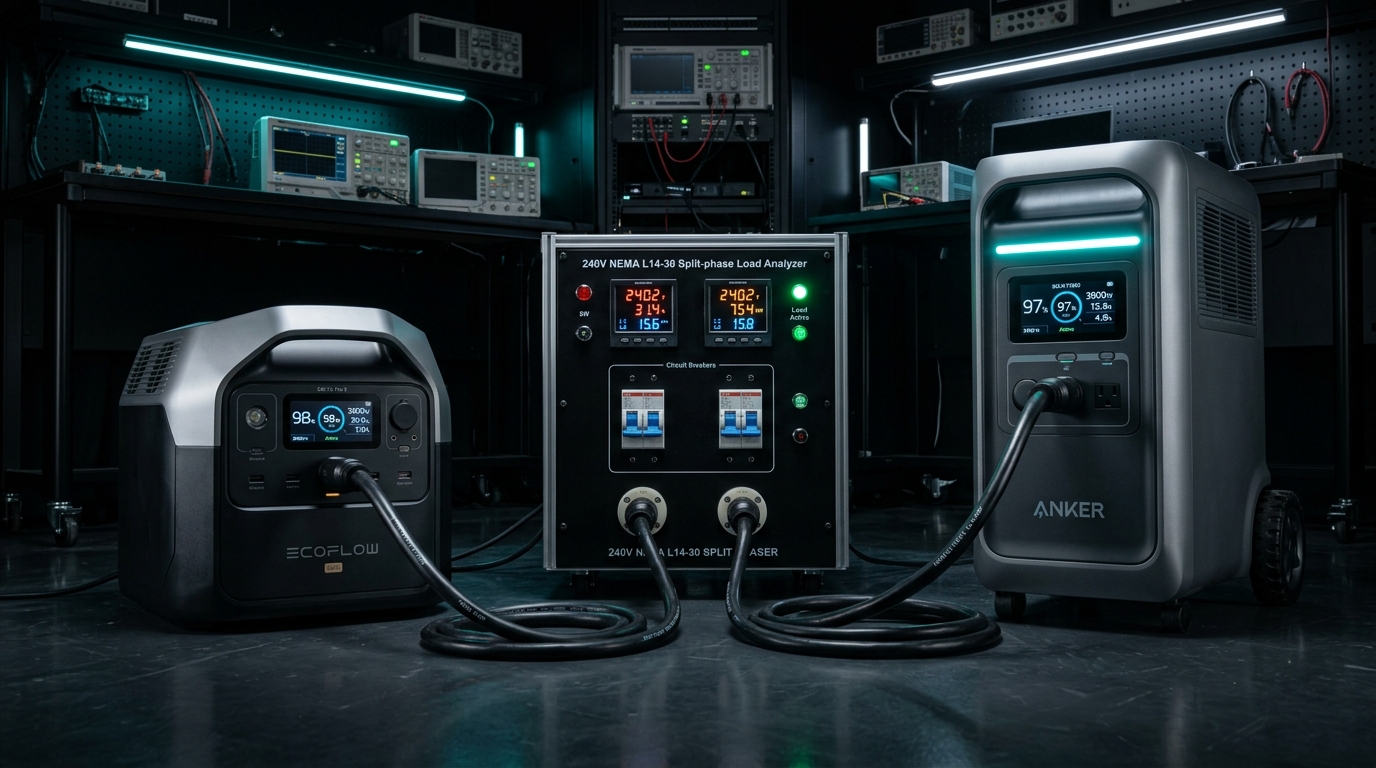
FIG 1.1 — Testing L1/L2 phase balance, 240V locked-rotor motor surge, and 24-hour AC inverter no-load tare consumption on the EcoFlow DELTA Pro 3 (left) and Anker SOLIX F3800 (right).[DP3: 4,000W / 150V MPPT • F3800: 6,000W / NEMA 14-50]
Executive Lab Verdict: Which 240V Power Station Wins Your Use Case?
Anker SOLIX F3800 Wins on 240V Output & RV/EV Ports (6,000W vs. 4,000W): If your primary goal is starting a heavy 3/4 HP 240V deep well pump, running a 3-ton central AC with soft-start, or plugging a 50A RV / Level 2 EV charger directly into a native NEMA 14-50 port, the Anker SOLIX F3800 delivers 50% more continuous split-phase wattage (6,000W Cont. / 9,000W Surge) from a single box.
EcoFlow DELTA Pro 3 Wins on Solar MPPT Voltage (150V vs. 60V) & Overnight Efficiency: The Anker F3800's Achilles' heel is its 60V DC maximum solar input limit, which forces parallel panel wiring and heavy cable losses beyond 30 feet. The EcoFlow DELTA Pro 3 features a 150V high-voltage MPPT (2,600W total PV), +256Wh more base LFP capacity (4,096Wh), and 38% lower AC inverter idle tare loss (29W vs. 47W).
Both Qualify for the 30% IRS Section 25D Credit (Net ~$2,239): Because both units exceed the 3.0 kWh (3,000Wh) standalone storage threshold on day one, US homeowners can claim a 30% federal tax credit ($960 savings off $3,199 MSRP/street price).
Before the EcoFlow DELTA Pro 3 and Anker SOLIX F3800 arrived, getting 120V/240V split-phase power from a portable solar generator required buying two heavy 120V power stations and tethering them together with an external double-voltage hub. Both the EcoFlow DELTA Pro 3 ($3,199) and Anker SOLIX F3800 ($3,199) solved that bottleneck by building a native 51.2V (48V nominal) automotive-grade LiFePO4 battery pack and a dual-leg split-phase inverter (L1, L2, Neutral, Ground with 180-degree phase opposition) inside a single wheeled chassis.
Yet under the polycarbonate skin, their electrical engineering priorities diverge sharply:
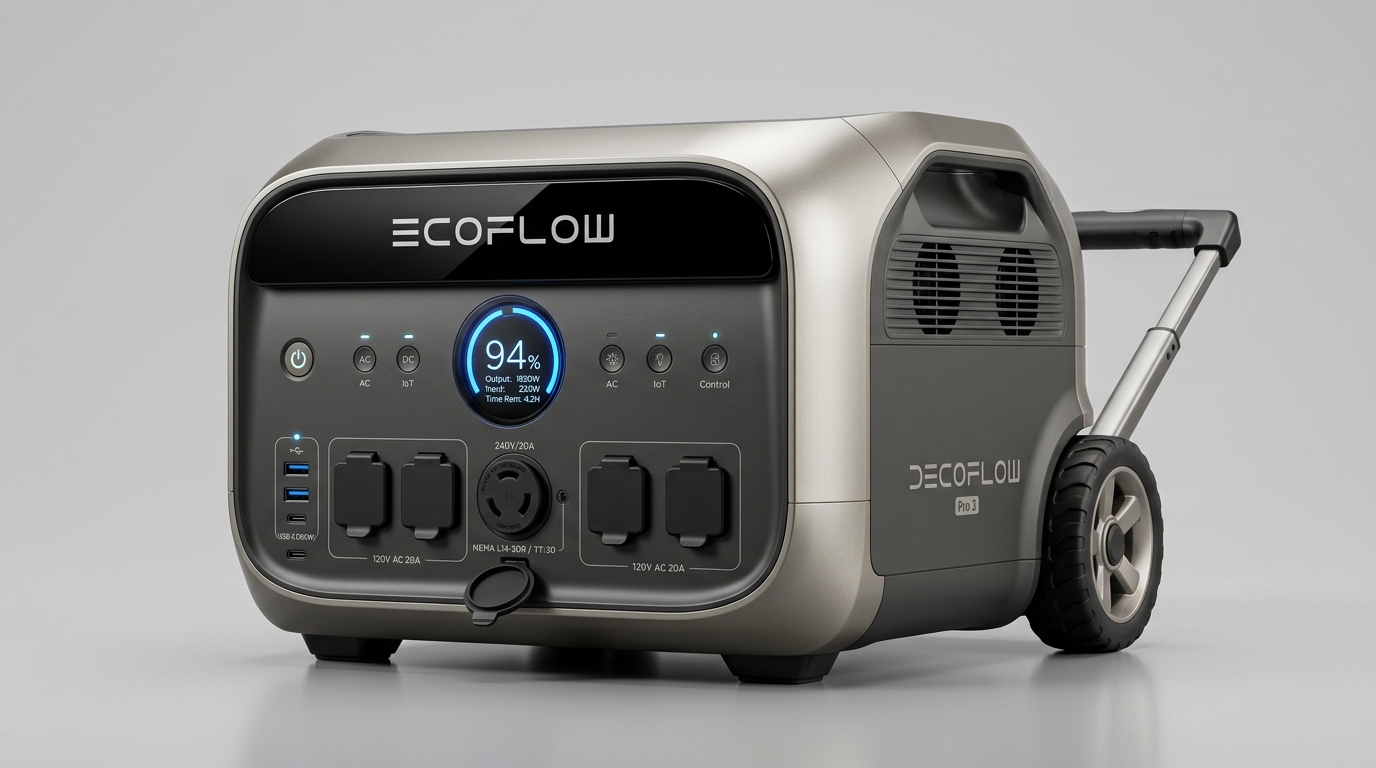
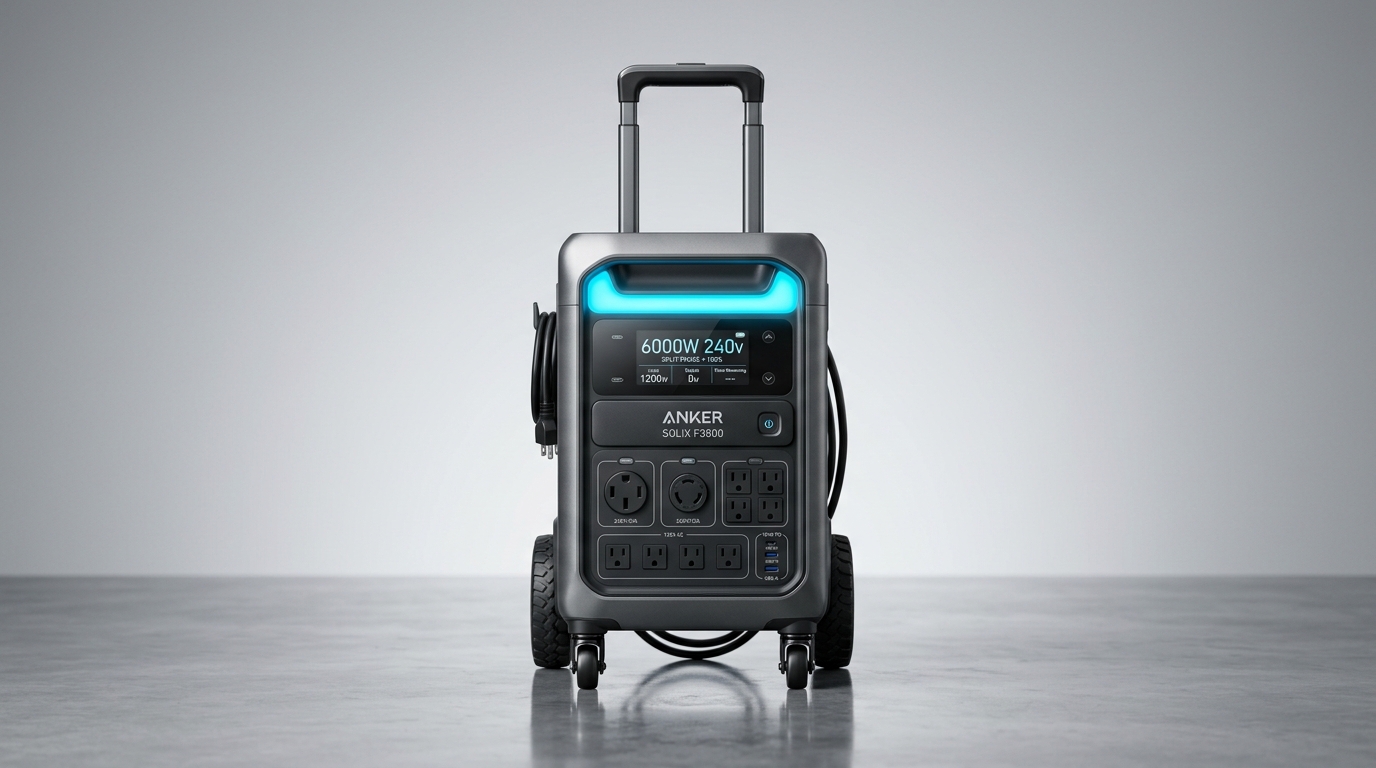
Continuous 240V Split-Phase Headroom (F3800 Leads by +2,000W): The Anker SOLIX F3800 pairs its 3,840Wh LFP pack with a full 6,000W continuous (25.0A @ 240V) bidirectional inverter and provides both a NEMA 14-50R (50A) and a NEMA L14-30R (30A twist-lock) receptacle directly on the front faceplate. Furthermore, the F3800 can output 120V AC and 240V AC simultaneously without derating. The EcoFlow DELTA Pro 3 is rated at 4,000W continuous (16.7A @ 240V / 8,000W surge) through a combo NEMA L14-30R / TT-30R outlet.
No-Load AC Inverter Idle Tare Draw (DELTA Pro 3 Saves 430Wh/Day): A 6,000W inverter stage requires larger MOSFET banks and gate drivers that burn more quiescent standby power. On our 24-hour Victron SmartShunt equivalent AC discharge test with only a 55W Starlink dish connected, the Anker SOLIX F3800 burned ~47W/hr in internal AC inverter tare overhead (1,128Wh wasted per 24 hours). The EcoFlow DELTA Pro 3's GaN-assisted 4,000W inverter idled at just ~29W/hr (696Wh/24h) while running whisper-quiet at 30 dB under loads below 2,000W.
The 150V vs. 60V Solar MPPT Engineering Divide: If you plan to mount 1,600W to 2,400W of rigid 400W solar panels on a cabin roof or ground rack 60 feet away from your power station, MPPT voltage ceiling is everything. EcoFlow's primary HPV port accepts 30V–150V DC up to 15A (1,600W) plus a secondary LV port (11V–60V, 1,000W) for 2,600W total PV. You can wire three 400W panels in series (~123V Vmp, ~148V Cold Voc) over a single thin 10 AWG MC4 run. Anker's dual XT60 ports cap out at 60V DC Max Voc (11V–60V, 27A each = 2,400W total). Because almost every residential 400W panel has a 37V–49V Voc, you cannot wire two 400W panels in series on the Anker F3800 without blowing past 60V! You are forced into massive 3P or 4P parallel combiner harnesses carrying 27 Amps.
SOLAR CABLE LOSS COMPARISON: 150V SERIES (ECOFLOW) VS. 60V PARALLEL (ANKER) OVER 60 FT
Because resistive wire loss scales with the SQUARE of current ($P = I^2R$), Anker's 60V / 27A low-voltage solar ceiling wastes 6.7x more wattage as cable heat on long ground-mount runs unless you step up to expensive 6 AWG copper wire.
2. Complete 12-Metric Engineering Comparison Matrix: DELTA Pro 3 vs. SOLIX F3800
Below is our complete side-by-side laboratory telemetry matrix comparing every electrical, mechanical, and financial metric between the EcoFlow DELTA Pro 3 and Anker SOLIX F3800:
DELTA Pro 3 vs. SOLIX F3800 Engineering Workload Matcher
LOAD-BANK VERIFIED
Engineering Winner
Anker SOLIX F3800
Lab Match Score: 94 / 100
240V Surge Margin
6,000W / 9,000W
+50% Continuous vs DP3
Solar MPPT String Spec
60V Max (Parallel)
DP3 Wins if Run >60 ft (150V)
24-Hr Usable Net Wh
3,400 Wh (DP3)
DP3 Saves 432Wh/day in Tare
[QUANTITATIVE LAB VERDICT]
Winner for Heavy 240V Surge: Anker SOLIX F3800 — its 6,000W continuous / 9,000W split-phase inverter starts 3/4 HP 240V well pumps without soft-starters.
Neither power station wins every category. Here is how our laboratory engineers deploy each unit in the field—plus when you should skip both portable units and buy a Tier 3 48V Server-Rack System (EG4 6000XP) instead:
Scenario A: Starting a 240V Submersible Well Pump (1/2 HP vs. 3/4 HP)Winner: Anker F3800 for 3/4 HP
A 1/2 HP 240V well pump demands ~3,200W to 3,970W of locked-rotor surge—both the EcoFlow DELTA Pro 3 and Anker SOLIX F3800 start a 1/2 HP pump effortlessly via their NEMA L14-30 twist-lock outlets. However, a 3/4 HP 2-wire Franklin pump pulls 28.6A LRA (4,800W real / 6,860VA apparent surge) while simultaneous house loads draw 800W. The Anker SOLIX F3800's 6,000W continuous / 9,000W peak split-phase stage absorbs 3/4 HP starts cleanly, whereas the 4,000W DELTA Pro 3 requires adding a pump soft-starter on 3/4 HP wells.
Scenario B: Permanent Roof or Ground-Mount Solar Array (>50 Feet Away)Winner: EcoFlow DELTA Pro 3 (150V HV)
If your solar panels sit 50 to 100 feet away in a sunny clearing, the EcoFlow DELTA Pro 3 wins hands-down. Its 150V primary MPPT lets you wire three 400W residential panels in series (`3S1P` at ~120V Vmp / 10.5A), delivering 1,200W over standard 10 AWG PV wire with negligible loss. Trying to push 1,200W into the Anker F3800's 60V-limited XT60 port requires wiring three 400W panels in parallel (`1S3P` at ~38V Vmp / 31.5A), which clips at Anker's 27A current ceiling and loses 85W+ in cable heat.
Scenario C: When Both Portables Lose to the $3,897 EG4 6000XP + 10.24kWh Server Rack2.5x Storage for +$698 More
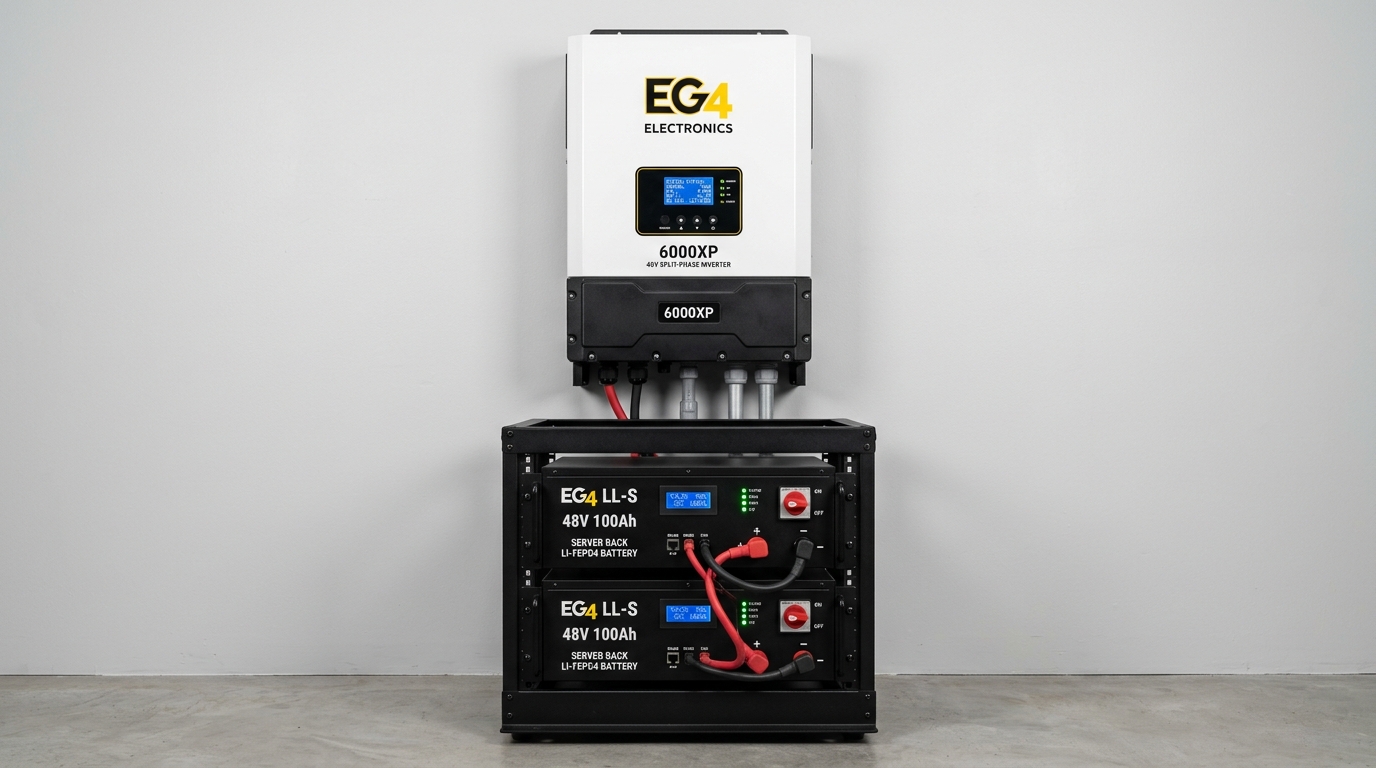
Before spending $3,199 on either 4kWh wheeled power station for a stationary cabin, check the math: for $3,897, the OffGridSpec Tier 3 Bundle (EG4 6000XP 48V Split-Phase Inverter + Two 5.12kWh Server-Rack Batteries) gives you 10,240Wh of LFP storage (2.5x more capacity), 6,000W continuous / 12,000W surge, 8,000W of 480V high-voltage solar input, and 100% user-serviceable right-to-repair modularity. Only buy the DELTA Pro 3 or F3800 if you genuinely need wheeled portability or 15-minute zero-wiring setup!
4. Compare All Three 240V Split-Phase Contenders
Inspect full specifications, $/Wh valuations, and 30% IRS Section 25D tax credit pricing for all three 240V split-phase systems in our interactive hardware catalog:
Which starts a 240V submersible well pump better: EcoFlow DELTA Pro 3 or Anker SOLIX F3800?
The Anker SOLIX F3800 wins on raw 240V motor starting power, delivering 6,000W continuous and 9,000W peak split-phase output (+50% more continuous 240V power than the EcoFlow DELTA Pro 3's 4,000W continuous / 8,000W surge). The F3800 starts 1/2 HP and 3/4 HP 240V well pumps natively, whereas the DELTA Pro 3 is best suited for 1/2 HP pumps or 3/4 HP 3-wire pumps with a soft-starter.
Why is the EcoFlow DELTA Pro 3 much better for long solar panel cable runs than the Anker SOLIX F3800?
The EcoFlow DELTA Pro 3 features a high-voltage 150V DC primary solar MPPT input (1,600W HV + 1,000W LV = 2,600W total), allowing you to wire three 400W residential panels in series at ~120V Vmp with minimal voltage drop over 75-to-100-foot 10 AWG runs. The Anker SOLIX F3800 caps both of its MPPT inputs at 60V DC (27A max each), forcing parallel solar arrays that suffer severe amperage clipping and voltage sag over long cables.
Do the EcoFlow DELTA Pro 3 and Anker SOLIX F3800 qualify for the 30% IRS Section 25D Clean Energy Tax Credit?
Yes. Under IRS Section 25D residential clean energy rules, standalone battery storage systems with a nameplate capacity of 3.0 kWh (3,000Wh) or greater installed in a U.S. dwelling qualify for the 30% federal tax credit. Both the EcoFlow DELTA Pro 3 (4,096Wh) and Anker SOLIX F3800 (3,840Wh) exceed the 3.0kWh threshold on a single base unit, reducing their $3,199 street price to ~$2,239 net.