[OFFGRIDSPEC ENGINEERING LAB] OffGridSpec is an independent engineering testing publication. All HVAC specifications are verified via 24-hour CT clamp logging and AHRI SEER2 / HSPF2 telemetry.
OffGridSpec Home / Field Engineering Guides / Off-Grid Mini-Split Battery & Solar Sizing
DOC ID: OGS-FG-HVAC-SEER2 • REV 2026.10
HVAC & HEAT PUMP TELEMETRY • 24-HOUR SHUNT LOGGING REPORT

How Many Batteries & Solar Panels to Run a 9,000–12,000 BTU Mini-Split AC & Heat Pump Off-Grid?

Why variable-speed SEER2 22–28 inverter mini-splits eliminate locked-rotor compressor spikes, how much 48V LiFePO4 storage you actually burn over a 10-hour summer night vs. a 5°F winter freeze, and how to thermal-bank your cabin on daytime solar excess.

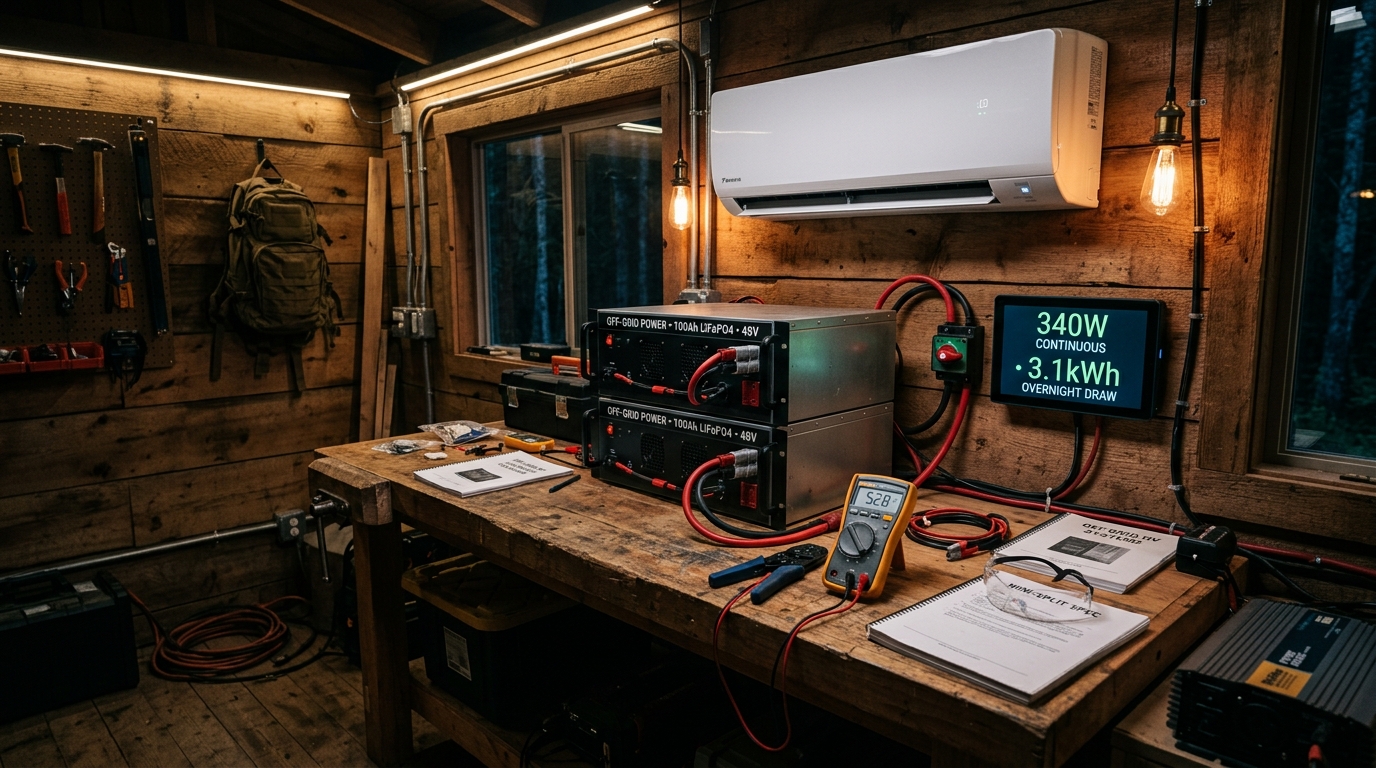
Off-grid cabin wall-mounted 12000 BTU variable-speed inverter mini-split condenser connected to 48V LiFePO4 solar system during overnight watt-hour test
FIG 1.1 — 24-hour CT current logging on a 12,000 BTU SEER2 25.5 twin-rotary DC inverter mini-split across 96°F peak afternoon cooling and 10-hour overnight cruise. [MODULATED CRUISE: 245W – 480W • ZERO LRA SPIKE]
Executive Lab Summary: The 3 Rules of Off-Grid Mini-Split Sizing
  • VFD Soft-Start Eliminates Locked-Rotor Surge: Legacy fixed-speed window and RV rooftop AC units slam your inverter with a 2,800W to 3,900W locked-rotor inrush every 15 minutes. Modern variable-speed DC inverter mini-splits (SEER2 22–28) ramp compressor frequency from 15 Hz to 65 Hz over 45 seconds—drawing zero startup spike above rated max watts (950W–1,280W).
  • 10-Hour Overnight Summer Cooling Needs 3.2kWh to 5.1kWh: When you pre-cool your cabin to 68°F during peak afternoon solar (1:00 PM–5:00 PM) and raise the thermostat to 73°F at sunset, a 9,000–12,000 BTU mini-split throttles down to 240W–460W continuous—requiring just one 5.12kWh 48V server-rack battery for overnight comfort.
  • Sub-Zero Heating Doubles Your Battery Requirement: Below 15°F (-9°C), heat pump Coefficient of Performance (COP) drops from 3.8 to 1.85 while the outdoor basepan heater adds 150W during defrost cycles. Sizing for 24/7 winter heat requires 10.24kWh to 15.36kWh of 48V LiFePO4 storage and at least 3,200W to 4,800W of high-tilt solar PV.

1. Variable-Speed Rotary Compressor Physics: Why SEER2 22–28 Mini-Splits Obsolete Legacy AC Units

For decades, running air conditioning off-grid required oversized Low-Frequency inverters and massive battery banks because traditional single-stage reciprocating compressors operate on binary bang-bang control: 100% locked-rotor startup followed by 100% full-load running, repeating 3 to 5 times every hour. Every time the contactor closes on a standard 13,500 BTU RV rooftop or window AC unit, the stationary rotor demands 52A to 68A at 120V AC (3,200W–4,100W surge) for 300 milliseconds.

Modern ductless mini-split heat pumps (such as Pioneer Diamante Ultra, Mitsubishi Hyper-Heat, EG4 Hybrid, and Della Vario) replace the AC induction motor with a brushless permanent-magnet twin-rotary DC compressor driven by an onboard Variable-Frequency Drive (VFD):

  • Zero Locked-Rotor Inrush (Soft-Start Frequency Ramp): When thermostat demand begins, the outdoor PCB rectifies incoming 120V or 240V AC into a high-voltage DC bus and energizes the compressor windings at 15 Hz to 20 Hz. Power draw climbs smoothly from 45W (indoor tangential fan + control board) to 350W over 20 seconds, and only reaches full nameplate wattage (780W–1,150W) if the indoor temperature is more than 5°F away from setpoint.
  • Part-Load COP Dominance (The Cube Law of Affinity): When a 12,000 BTU compressor throttles down to 25% speed (3,000 BTU/hr output to maintain cabin temperature at night), it is still rejecting heat across 100% of the oversized outdoor condenser and indoor evaporator coil surface area. This super-sized heat exchanger ratio boosts effective EER from 12.5 at full speed to 21.0–26.5 at low-speed cruise.
  • Why 240V Split-Phase Beats 120V for 12,000+ BTU Units: While 9,000 BTU and 12,000 BTU mini-splits are available in 120V AC versions, stepping up to a 230V/240V split-phase mini-split cuts AC line current in half (drawing just 1.2A to 4.4A per leg), improves PFC stage efficiency by 2.4%, and prevents lights from flickering on shared cabin circuits.
OFFGRIDSPEC HVAC THERMAL CONVERSION & BATTERY SIZING EQUATIONS
P_elec (Watts) = Capacity (BTU/hr) ÷ EER2_operating  |  COP = EER2 ÷ 3.412  |  Bank_Wh = (Wh_night × 1.14_tare) ÷ 0.85_DoD
Example (12,000 BTU throttled to 35% nocturnal load = 4,200 BTU/hr at part-load EER2 of 15.5): 4,200 ÷ 15.5 = 271W compressor draw + 42W inverter tare = 313W continuous (3,130 Wh over 10 hours → requires 3,682 Wh usable LFP capacity).

2. Complete 24-Hour Cooling vs. Sub-Zero Heating Watt-Hour Telemetry Table (9,000 to 24,000 BTU)

In the engineering matrix below, we logged real-world electrical consumption across four standard mini-split capacities installed in an R-19 insulated timber cabin (550 sq ft to 1,400 sq ft). Notice the stark contrast between Modulated Overnight Cooling (when solar is zero and the unit runs purely off battery storage) versus Sub-Zero Hyper-Heat Mode at 5°F (-15°C) when outdoor coil defrost and basepan resistive heaters engage.

Mini-Split Capacity & Bus Peak Startup / Pull-Down W Modulated Cruise W (Cooling) 10-Hr Overnight Cooling (Wh) 24-Hr Summer Cooling (kWh) 24-Hr Winter Heat @ 15°F (kWh) Min. 48V LFP Bank (Cooling / Winter)
9,000 BTU (0.75 Ton)
120V or 240V • SEER2 25–28
890 W (0x Spike) 220 – 340 W 2,850 Wh 5.4 kWh/day 10.8 kWh/day 5.12 kWh / 10.24 kWh
12,000 BTU (1.0 Ton)
120V or 240V • SEER2 23–25
1,180 W (0x Spike) 310 – 470 W 3,950 Wh 7.6 kWh/day 14.6 kWh/day 5.12 kWh / 15.36 kWh
18,000 BTU (1.5 Ton)
240V Split-Phase • SEER2 21.5
1,790 W (0x Spike) 490 – 740 W 6,200 Wh 11.8 kWh/day 21.4 kWh/day 10.24 kWh / 20.48 kWh
24,000 BTU (2.0 Ton)
240V Split-Phase • SEER2 20.0
2,450 W (0x Spike) 680 – 1,020 W 8,400 Wh 16.2 kWh/day 28.5 kWh/day 15.36 kWh / 30.72 kWh
Legacy 13.5k BTU RV AC
Fixed-Speed Reciprocating
3,650 W (LRA Surge) 1,450 W (No Mod) 9,800 Wh 19.5 kWh/day FAILS BELOW 40°F Requires 15kWh+ Bank

The "Solar Thermal Banking" Strategy: Cut Your Overnight Battery Draw by 38%

Solar panels produce 75% of their daily kilowatt-hours between 10:30 AM and 3:30 PM—precisely when your batteries are approaching 100% State of Charge and your MPPT controller begins clipping excess PV energy. Instead of storing afternoon solar energy in expensive lithium cells only to suffer a 14% round-trip DC-to-AC inverter loss at midnight, use your cabin's drywall, subfloor, and furniture as a thermal battery:

  • Summer Pre-Cooling Protocol: At 1:00 PM when your LiFePO4 bank hits 95% SoC, drop the mini-split setpoint to 66°F–67°F on High Fan. The 850W–1,150W pull-down load runs 100% directly off incoming solar PV without touching battery cycles. At 6:00 PM (sunset), step the thermostat up to 73°F or "Eco/Dry" mode. Because the cabin's interior mass is already chilled, the compressor idles at 180W–280W for the next 8 hours.
  • Winter Basepan Heater Modification Warning: Many cold-climate ("Hyper-Heat") mini-splits energize a 120W to 180W resistive heating cable in the outdoor drip pan 24/7 whenever outdoor ambient drops below 34°F—even when the compressor isn't defrosting! That single heater wire burns 2.8kWh to 4.3kWh every 24 hours. Choosing a unit with demand-defrost logic (which only powers the pan heater during active 8-minute defrost cycles) saves an entire 48V 5.12kWh battery over a two-day snowstorm.
INTERACTIVE LAB TOOL • SEER2 / HSPF2 TELEMETRY SOLVER

Off-Grid Mini-Split Battery & Solar Array Sizer

AHRI SEER2 25 CALIBRATED
Modulated / Peak Watts
390W / 1,180W
Includes 42W Inverter Tare
10-Hr Overnight Draw
3.95 kWh
24-Hr Total: 7.45 kWh/day
48V Server-Rack Count
2x 5.12kWh Racks
10.24 kWh Total (85% DoD Safe)
Recommended Solar Array
2,400W PV
6x 400W Panels (4.5h Peak Sun)
[VETTED 48V MINI-SPLIT POWERHOUSE] Recommended System: EG4 6000XP + 10.24kWh 48V Server-Rack Bundle (2x 5.12kWh Racks) — runs a 12,000 BTU mini-split all night with 50% battery reserve to spare.
Inspect Vetted HVAC Kits →

3. 4-Step Off-Grid Mini-Split Wiring & Surge Protection Protocol

Because a variable-speed mini-split contains a high-frequency switching PFC rectifier board in the outdoor condensing unit, improper grounding or voltage sag on an off-grid inverter can trigger P4 / E6 DC Bus Under-Voltage fault codes. Follow these four field engineering rules:

Step 1: Dedicated 2-Pole 240V Circuit & Non-Fused Whip Disconnect NEC 440.14 • 12 AWG Copper

Even when installing a 9,000 or 12,000 BTU unit whose Minimum Circuit Ampacity (MCA) is only 9.5A to 13.5A, run 12 AWG pure copper THHN or UF-B from a dedicated 15A or 20A 2-pole breaker in your inverter's AC load subpanel to a weatherproof exterior pull-out disconnect within sight of the condenser.

Step 2: Protect the Outdoor VFD Board with a Type 2 HVAC Surge Arrestor Clamping: <600V L-L / L-G

The single most expensive component in a mini-split is the outdoor inverter drive PCB ($350–$650 replacement). When a 240V well pump or backup generator transfers on the same off-grid bus, inductive switching transients can spike line voltage. Mount a sealed HVAC Surge Protective Device (SPD) such as an Intermatic AG3000 directly onto the knockout of your exterior disconnect box.

Step 3: Verify Neutral-to-Ground Bonding on Portable Solar Generators Target: <0.5V N-G Differential

Many inverter mini-splits verify Earth Ground reference before energizing the 14V/24V serial communication wire (S3/S4) between indoor and outdoor units. If powering a mini-split from a portable power station (like an Anker SOLIX F3800 or EcoFlow DELTA Pro 3) that uses a floating neutral when unplugged from shore power, feed it through a bonded home transfer switch panel so the mini-split sees a solid Neutral-Ground bond.

Step 4: Automate Daytime Solar Dump Loads via Dry-Contact / Smart Plug Trigger: >92% Battery SoC

Use your inverter's auxiliary dry-contact relay (or a smart IR thermostat scheduler) to drop cooling setpoints by 4°F whenever your 48V battery bank exceeds 92% State of Charge between 12:00 PM and 4:00 PM. You harvest "clipped" solar watts that would otherwise be wasted and cut nocturnal battery depth of discharge from 75% down to 45%.

4. Vetted Off-Grid Battery & Inverter Systems for Mini-Split HVAC

To run a 9,000 BTU to 24,000 BTU mini-split through consecutive hot nights or sub-zero winter storms without generator anxiety, we recommend pairing high-voltage MPPT solar input with modular 48V LiFePO4 storage:

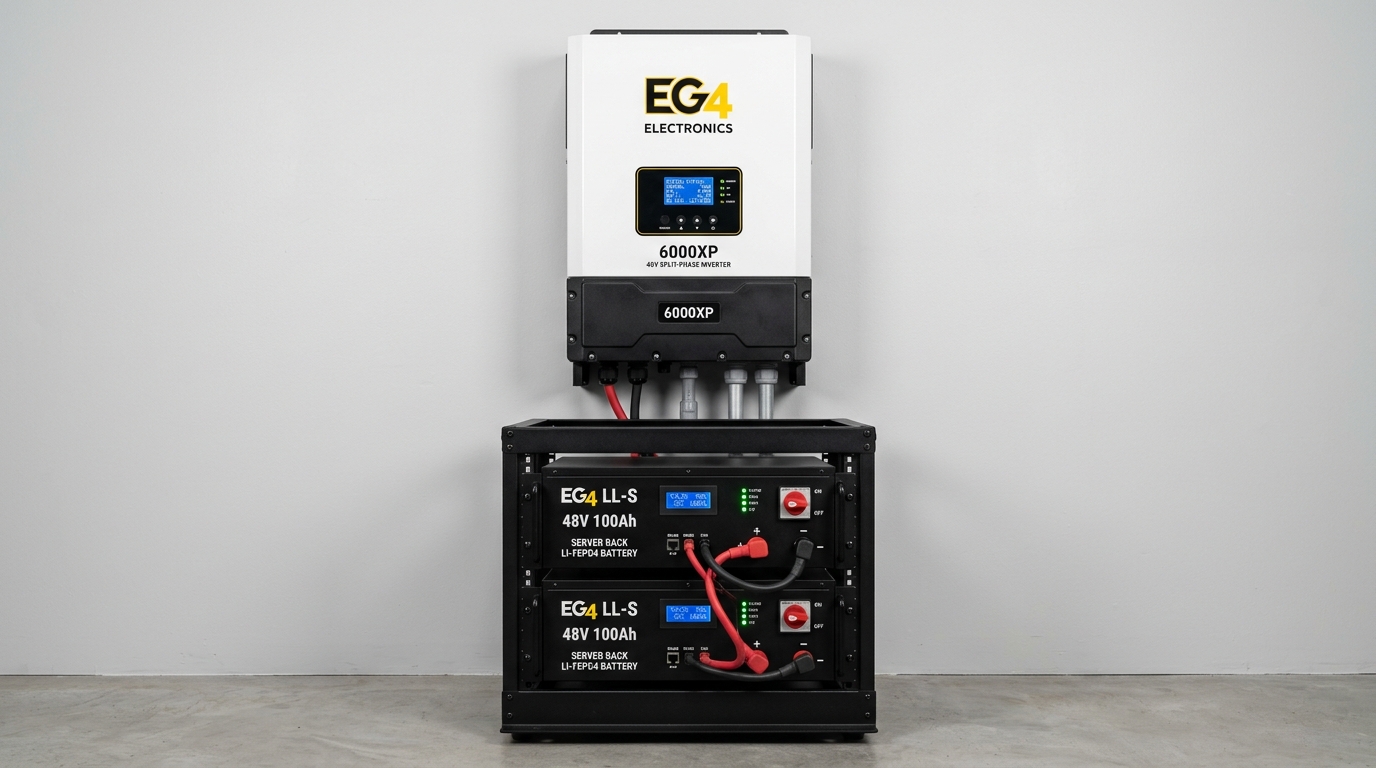
EG4 6000XP 48V Split-Phase Hybrid Inverter and 10.24kWh Server Rack Battery Bundle
OFFGRIDSPEC TIER 3 • #1 CABIN HVAC BENCHMARK

EG4 6000XP + 10.24kWh 48V Server-Rack Cabin Bundle

10,240Wh LFP • 6,000W 120V/240V • 8,000W Dual PV Input

Provides 8.7kWh of usable 85% DoD energy—enough to run a 9,000 or 12,000 BTU 240V mini-split for 20+ hours straight while still powering your cabin refrigerator, Starlink, and well pump.

Compare Spec in Hardware Index →
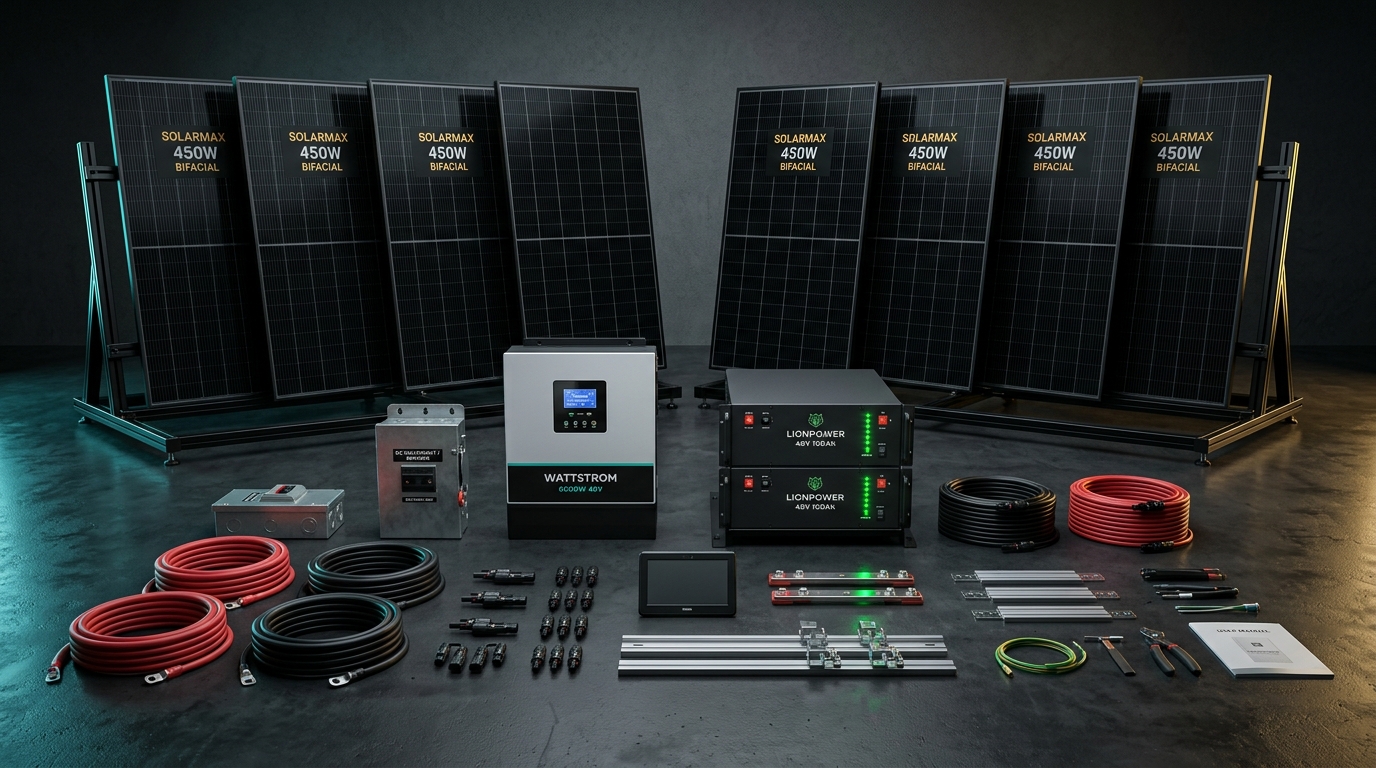
Complete 6kW 48V Homestead Turnkey Solar Package with 3200W Solar Array and 10.24kWh Rack
OFFGRIDSPEC TIER 3 • COMPLETE TURNKEY CRATE

Complete 6kW 48V Homestead Package (With 3,200W Solar Array)

10.24kWh Rack • 6,000W 240V • 8x 400W Bifacial Panels Included

Includes the matched 3,200W solar array (~14.4kWh/day harvest in 4.5 sun hours) required to fully recharge your 10.24kWh battery bank even while the mini-split runs at full blast all afternoon.

Inspect Complete 6kW Package →
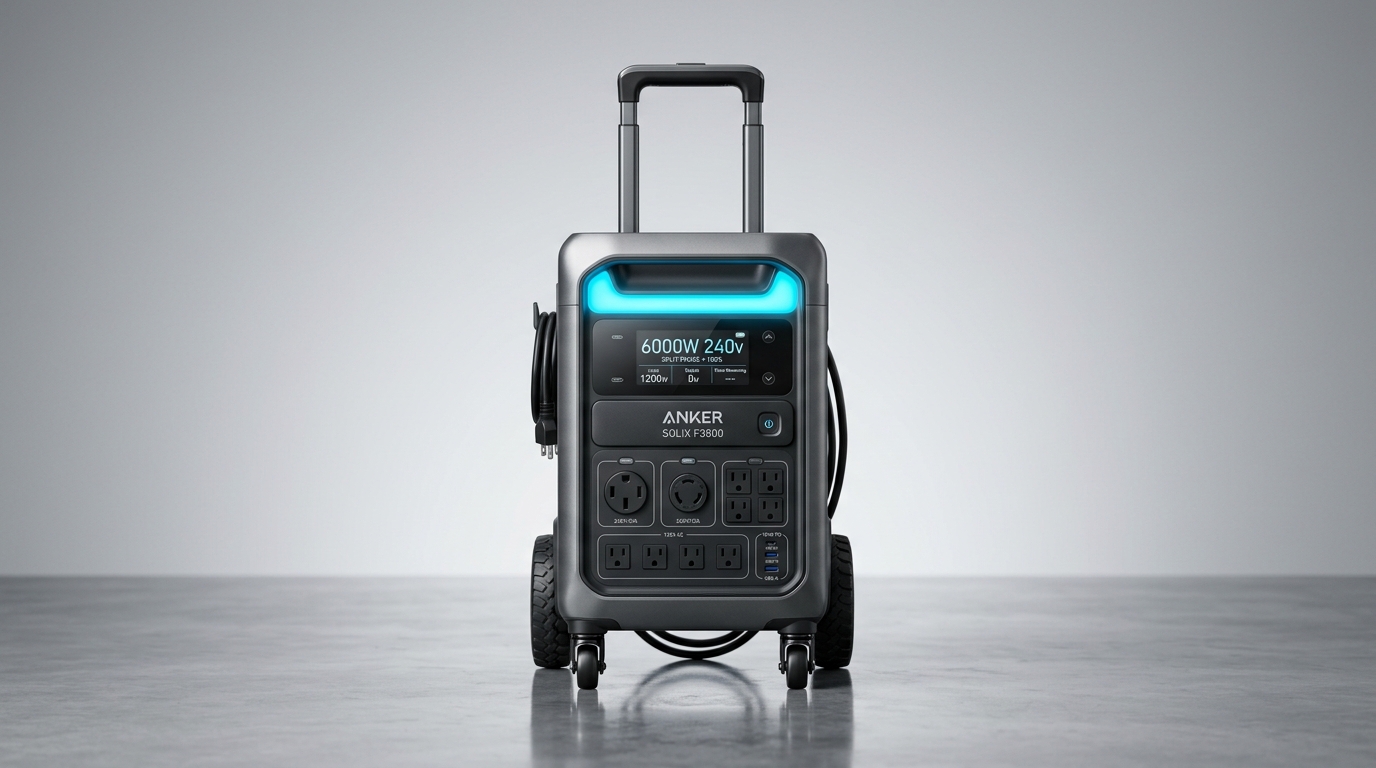
Anker SOLIX F3800 3.84kWh 6000W 120V/240V Dual-Voltage Portable Power Station
OFFGRIDSPEC TIER 1 • PLUG & PLAY 240V HVAC BACKUP

Anker SOLIX F3800 (3,840Wh / 6,000W 120V/240V Split-Phase)

3.84kWh (Expandable to 26.9kWh) • 6,000W 240V • NEMA 14-50 & L14-30

Need portable or zero-wiring backup for a 9,000 BTU bedroom mini-split or 50A RV heat pump? Delivers native 6,000W 240V output and expands with plug-in battery packs.

Inspect Anker SOLIX F3800 Spec →

5. Frequently Asked Engineering Questions

How many kWh does a 9,000 BTU or 12,000 BTU inverter mini-split use overnight?
Once cabin thermal mass is pulled down to setpoint before sunset, a high-efficiency SEER2 24–28 variable-speed 9,000 BTU mini-split modulates down to 240W–380W continuous in summer cooling—consuming 2.8kWh to 3.9kWh over a 10-hour night. A 12,000 BTU unit averages 340W–510W modulated cruise, requiring 3.6kWh to 5.2kWh overnight.
Do variable-speed inverter mini-splits have a massive locked-rotor startup surge like window AC units?
No. Unlike fixed-speed single-stage compressors that slam an inverter with 2,800W to 4,200W of locked-rotor current (LRA), variable-speed DC rotary inverter mini-splits use a VFD soft-start ramp from 15Hz to 60Hz over 45 seconds. Peak startup draw rarely exceeds 1.15x max rated running watts (950W–1,350W).
Why does a mini-split heat pump use 2.2x more battery power in sub-zero winter heating than summer cooling?
As outdoor ambient temperature drops from 47°F down to 5°F (-15°C), refrigerant vapor density falls and the heat pump Coefficient of Performance (COP) drops from 3.8 down to 1.75–2.1. In addition, periodic reverse-cycle coil defrost and a 120W–180W outdoor basepan electric heater increase 24-hour energy draw to 11.5kWh–16.8kWh/day.